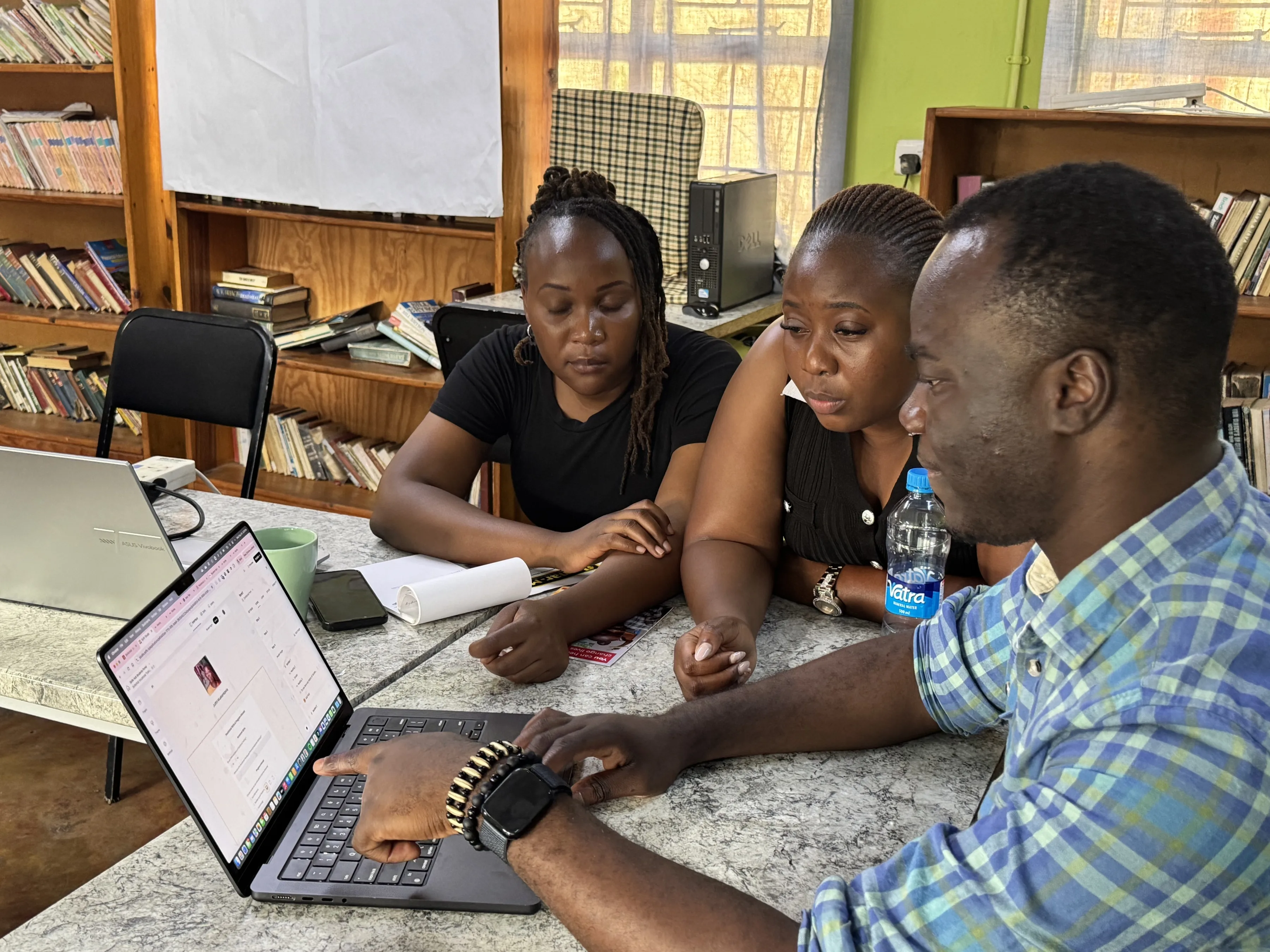
Human-centred education in our digital world
Your support ensures students use technology, critically ethically and with purpose.
Supporting Artificial Intelligence use and the ethics of Artificial Intelligence
Education for a digital world
Artificial Intelligence and technology are already influencing careers, communication and creativity. Young people are entering workplaces where AI tools are commonplace yet understanding of how to use them responsibly and effectively is not automatic.
That is why we are integrating AI and digital literacy into our existing, values-led curriculum. Grounded in Pestalozzi’s philosophy of Head, Heart and Hands approach we ensure:
- AI supports critical thinking
- Technology strengthens reflection
- Digital tools enhance creativity and not diminish human connection
- Students evaluate bias, accuracy and ethical impact
We teach students to ask:
- Is this information accurate?
- What assumptions is this technology making?
- Who might be missing from this perspective?
- How can I use these tools and skills to contribute positively to my community?
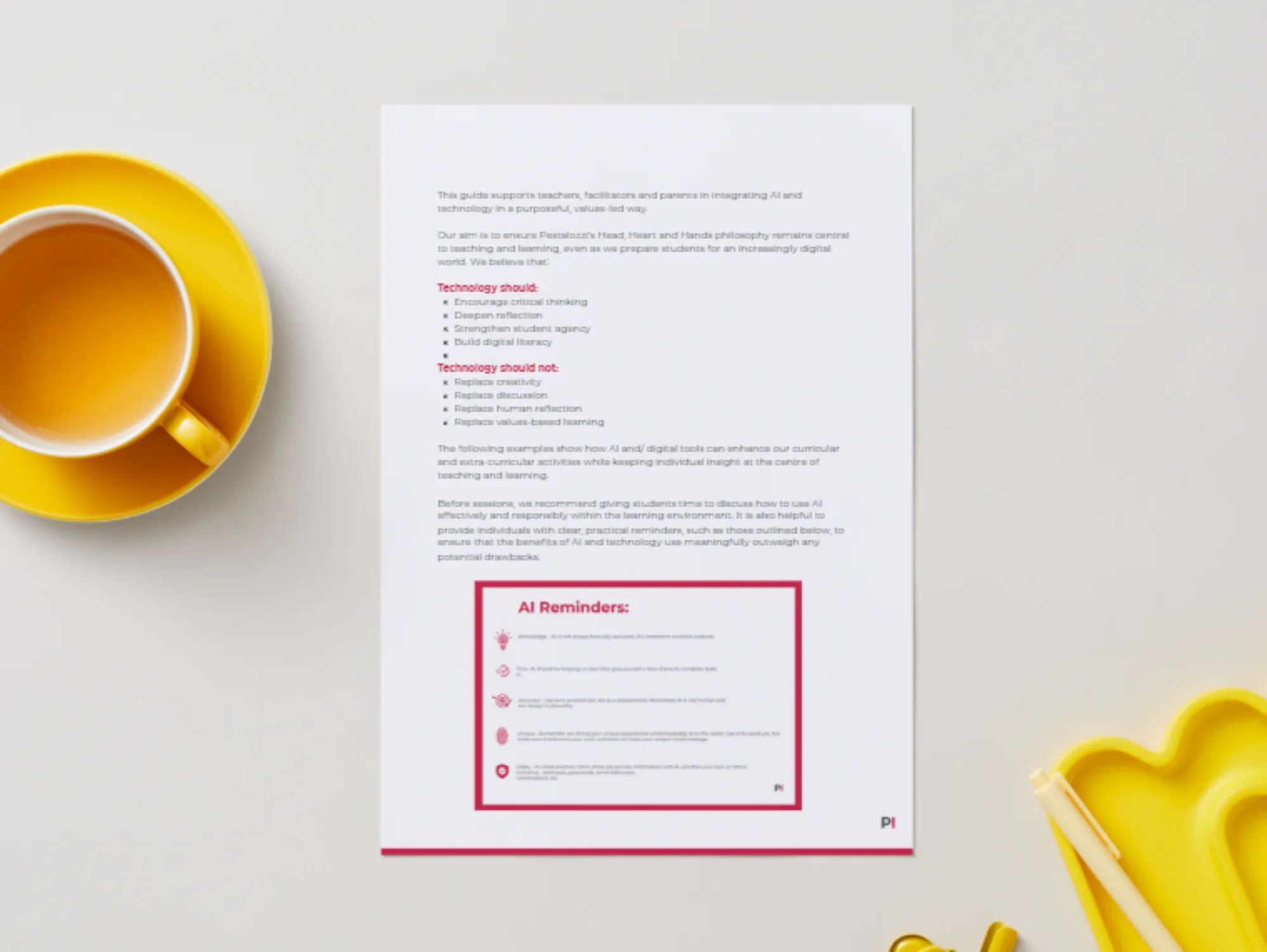
Head, Heart & Hands In A Digital World
A practical guide to integrating AI in teaching while keeping Pestalozzi’s Head, Heart & Hands philosophy at the centre of learning.
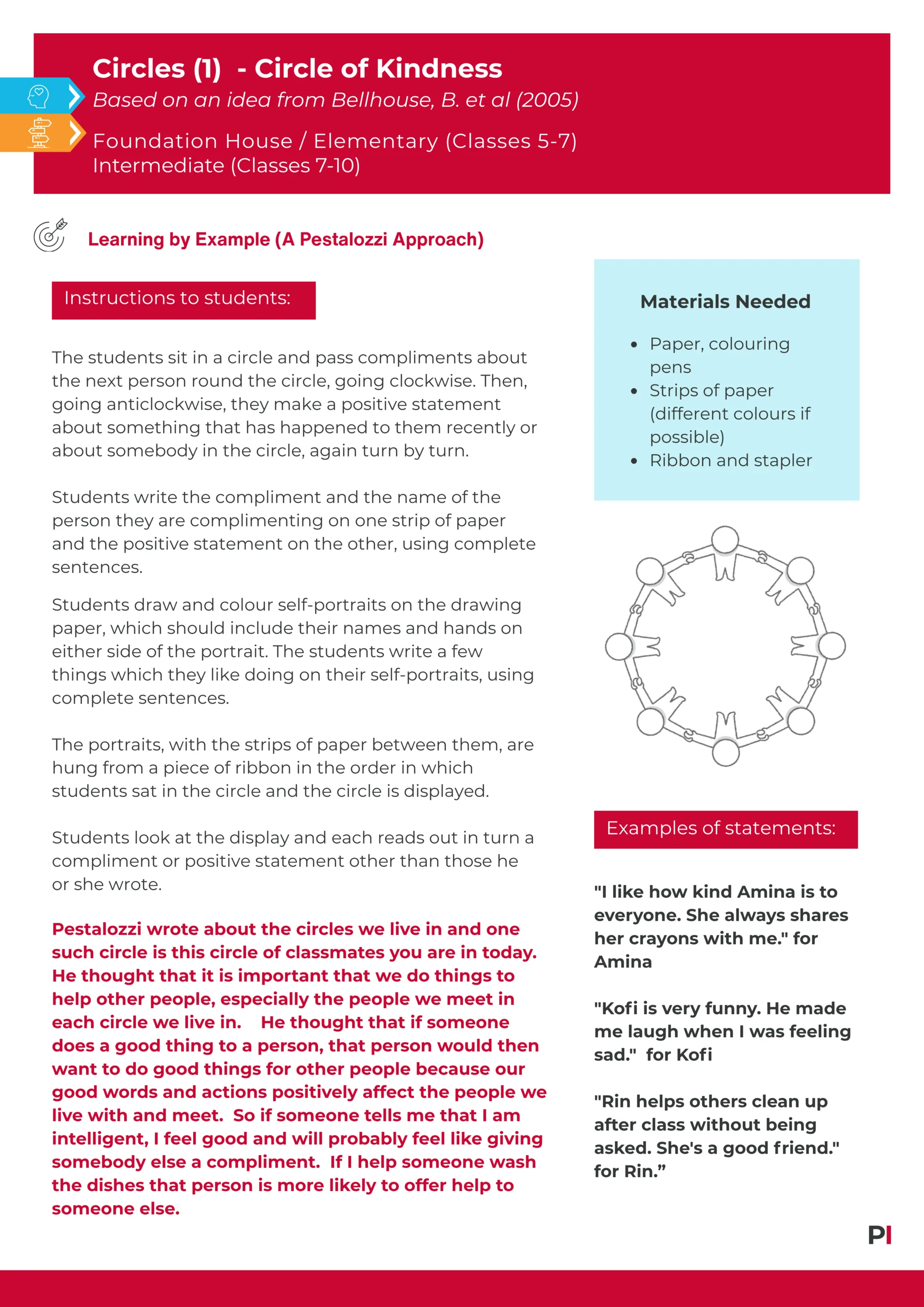
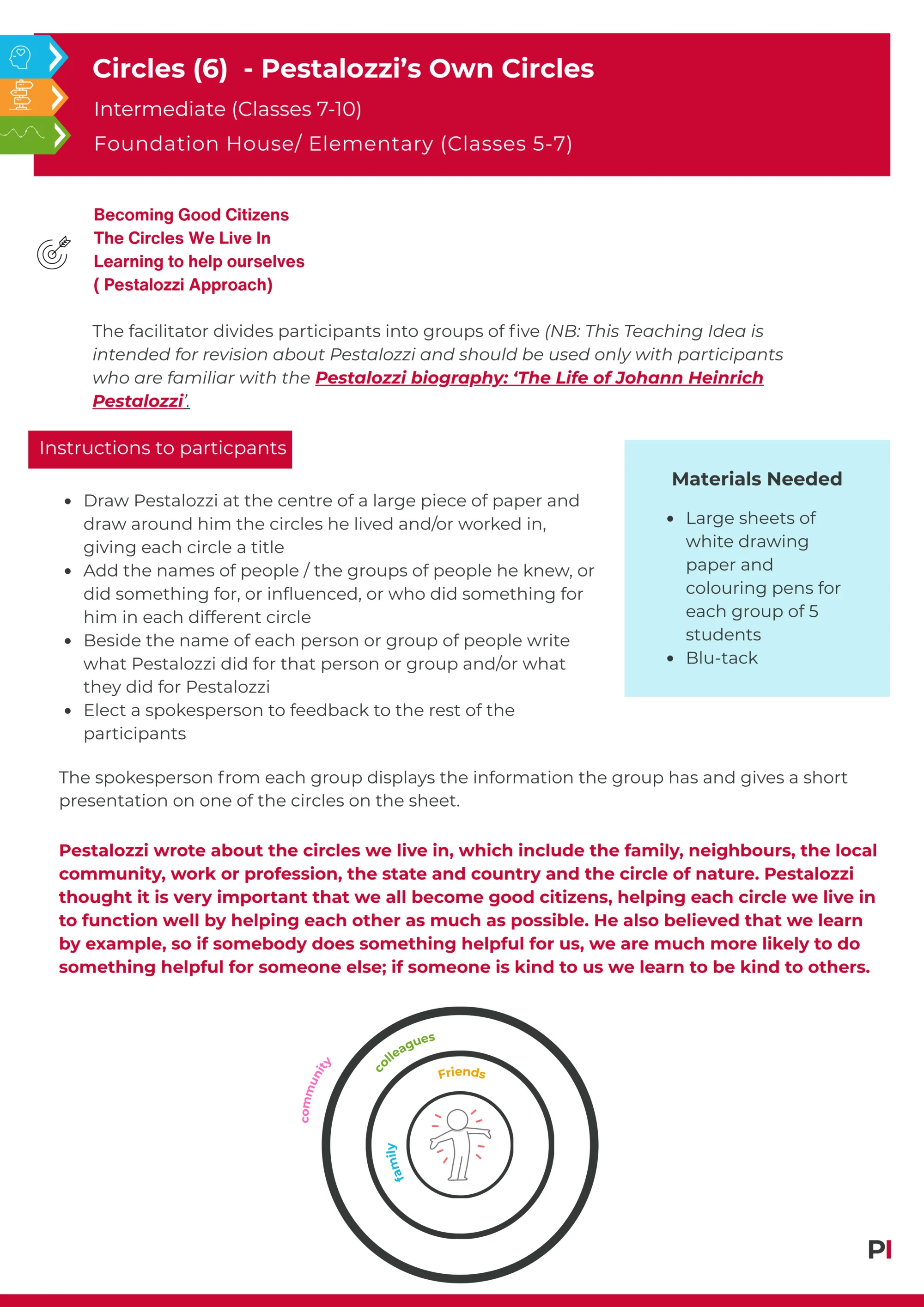
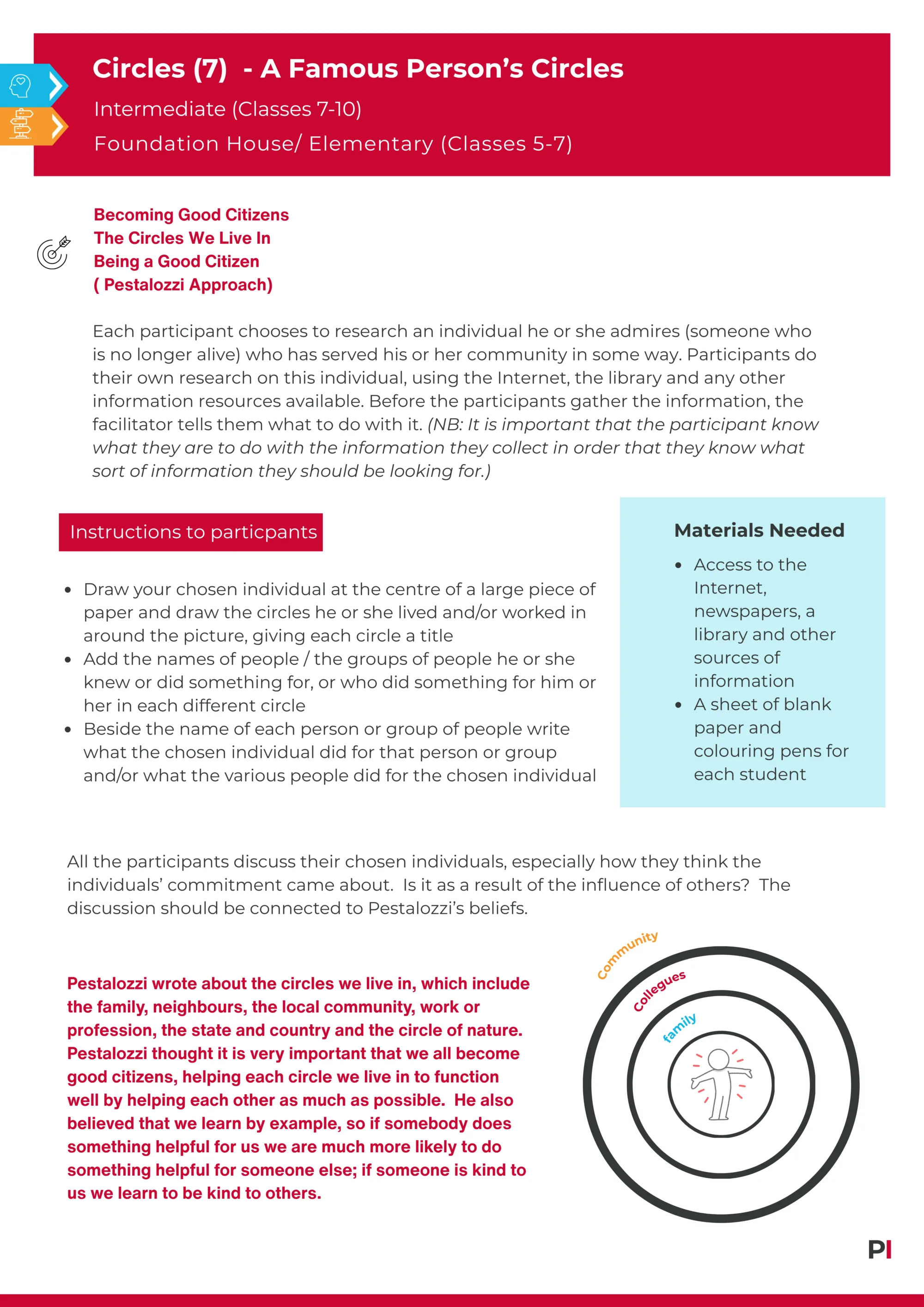
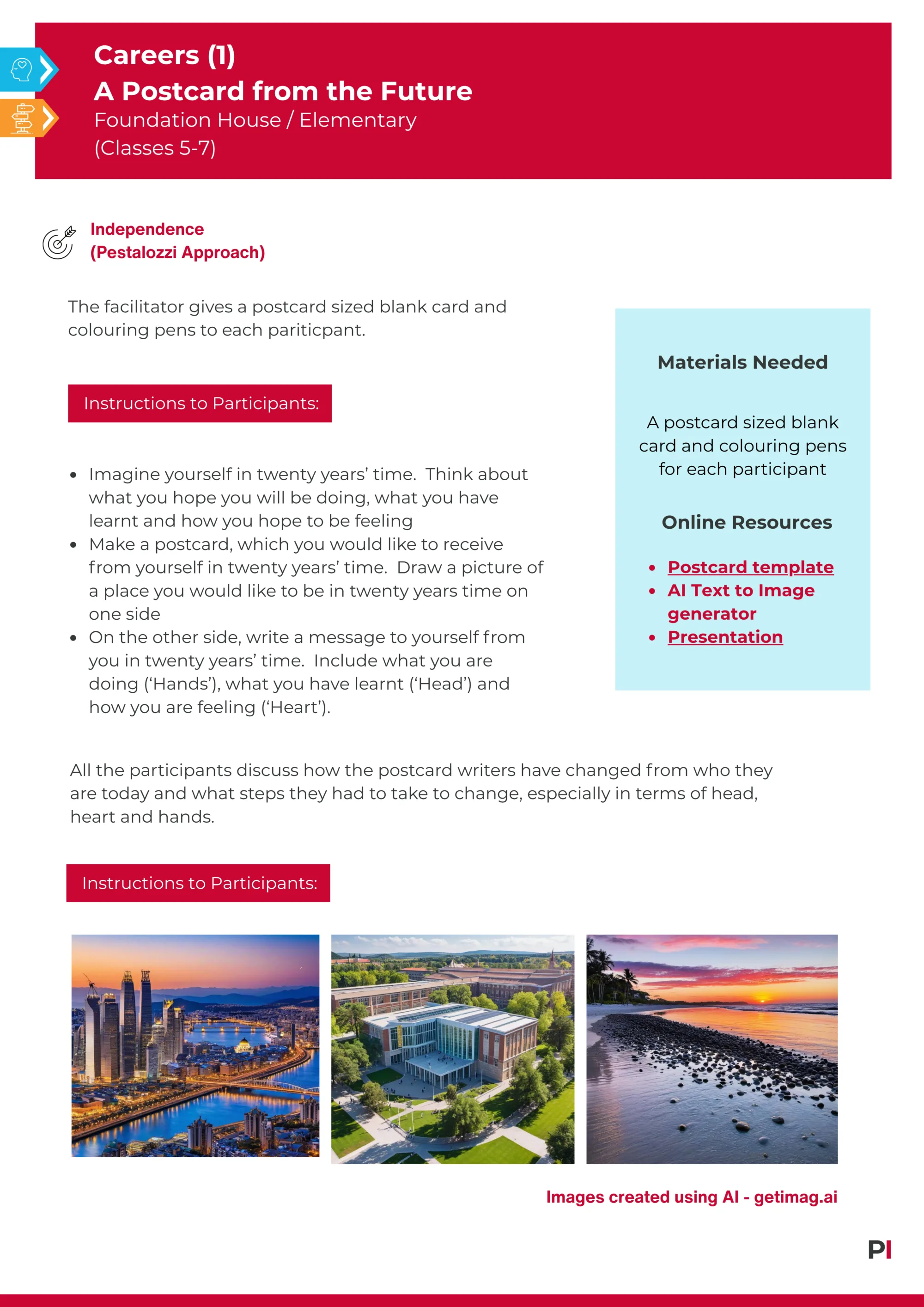
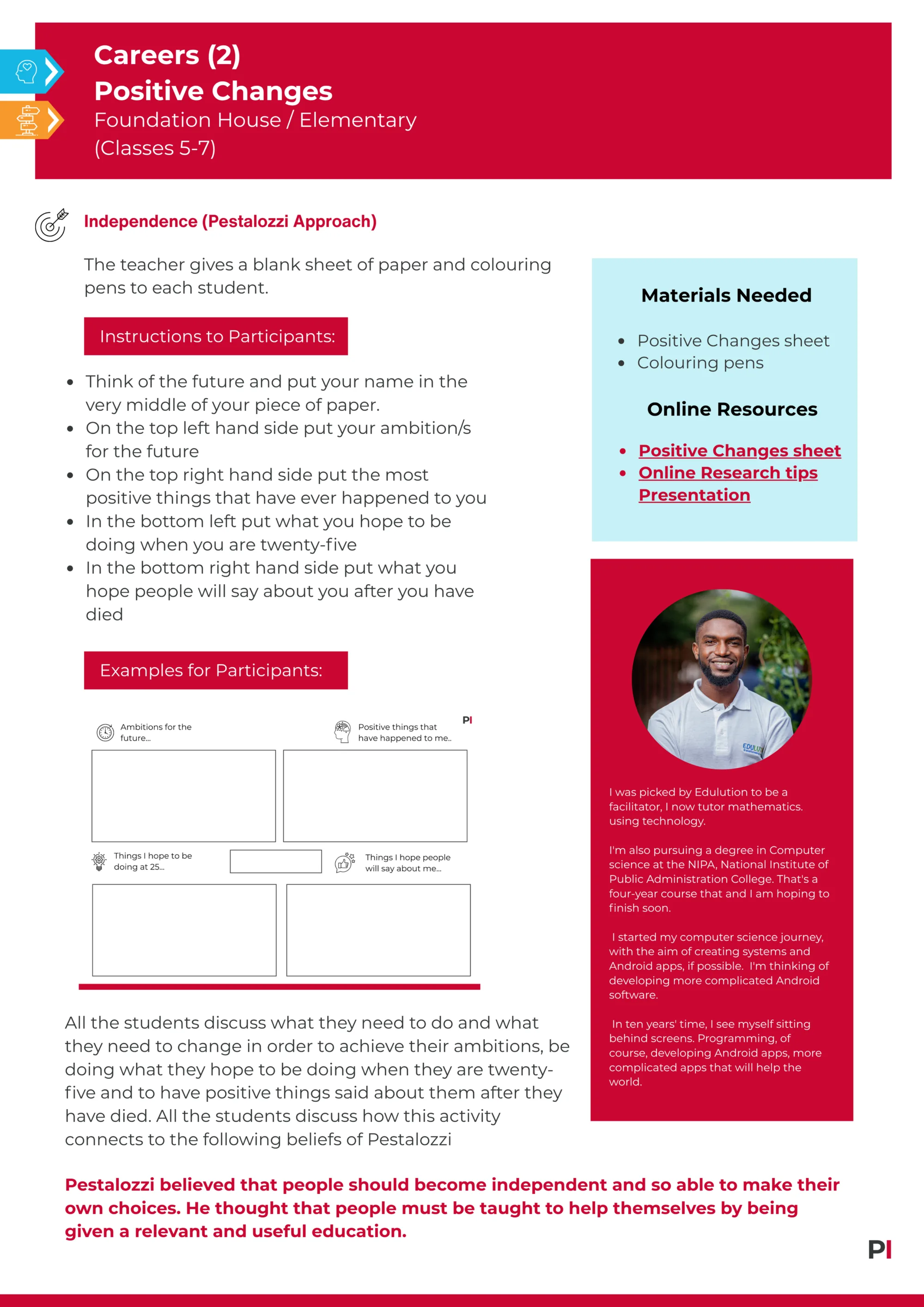
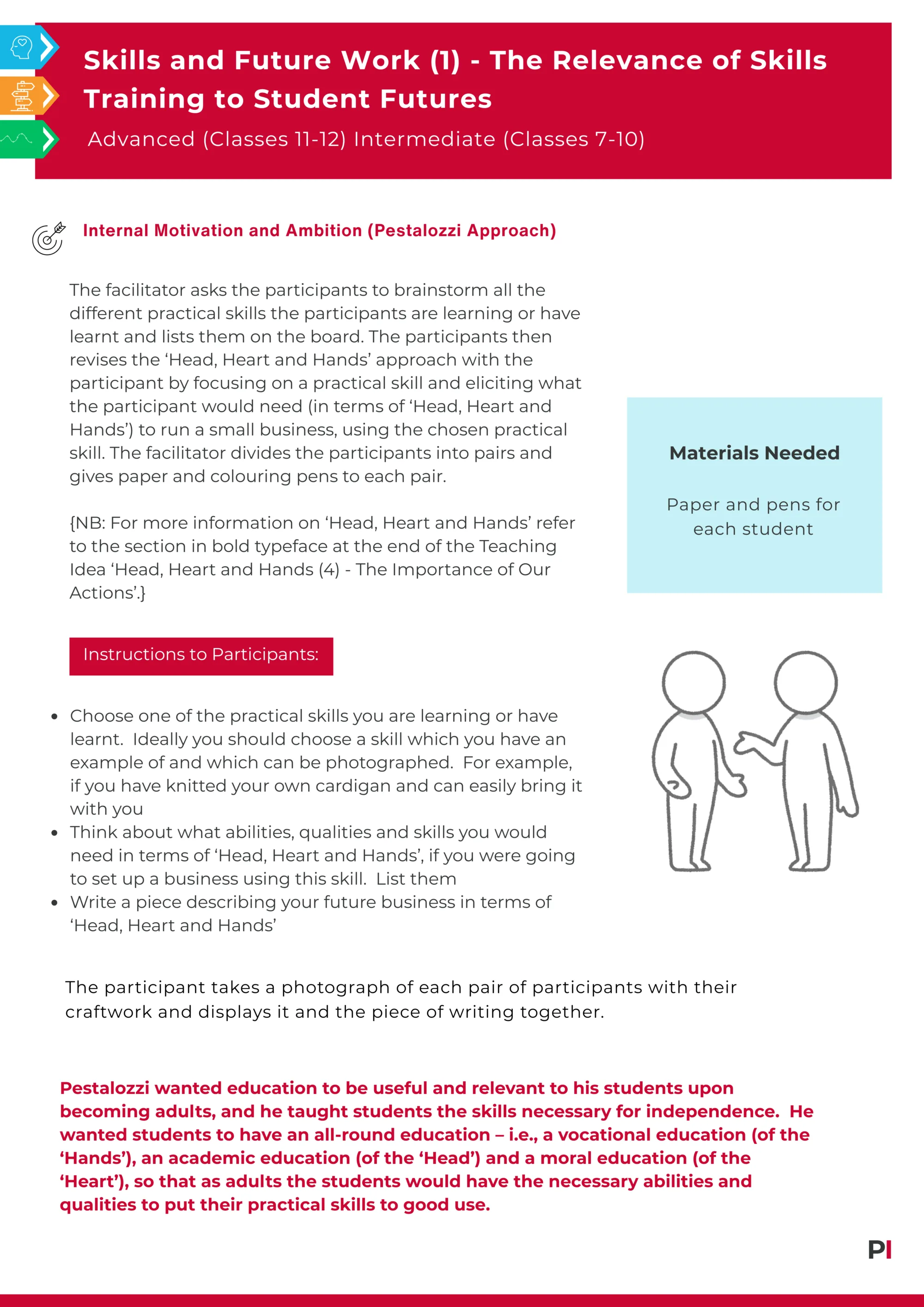
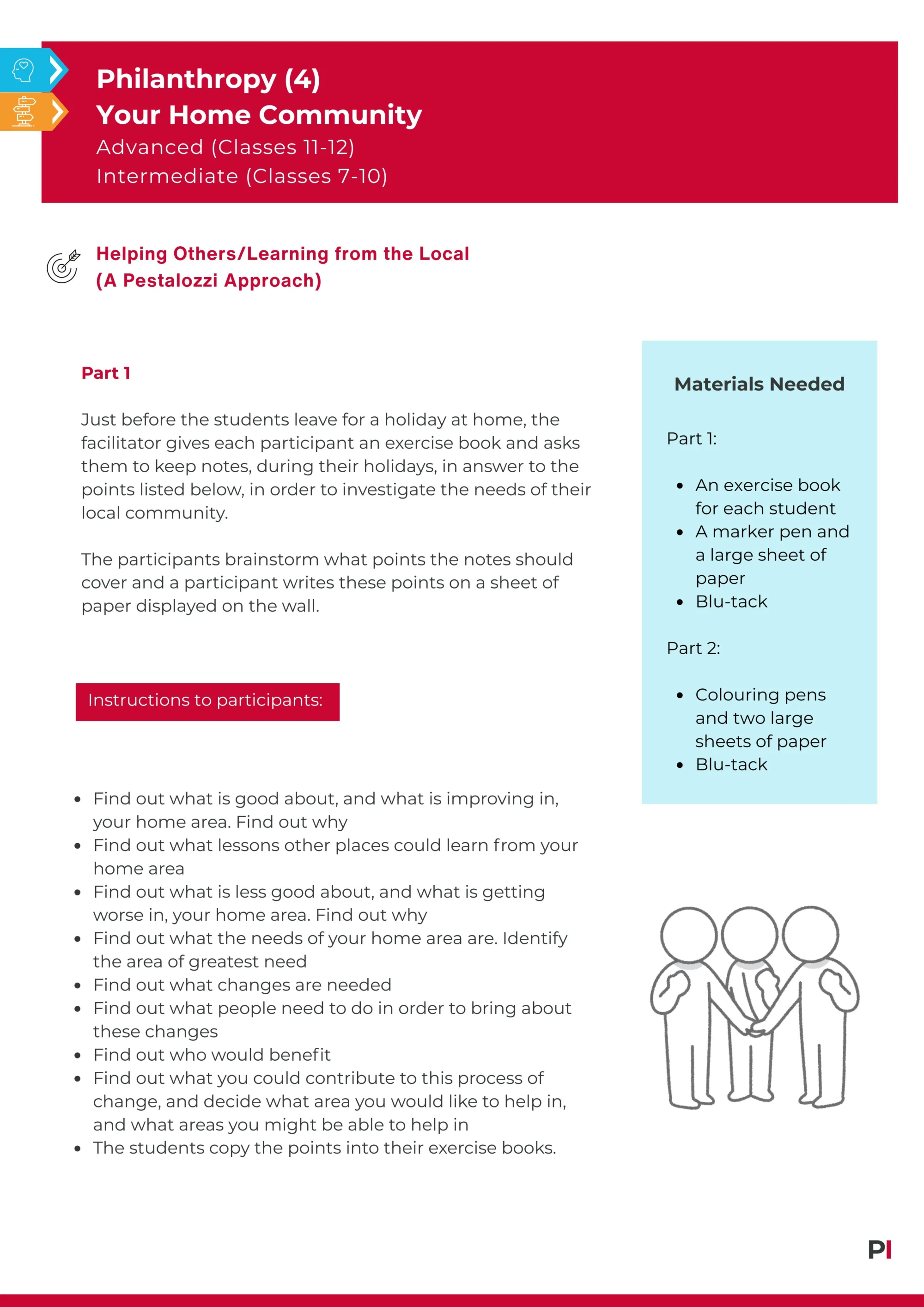
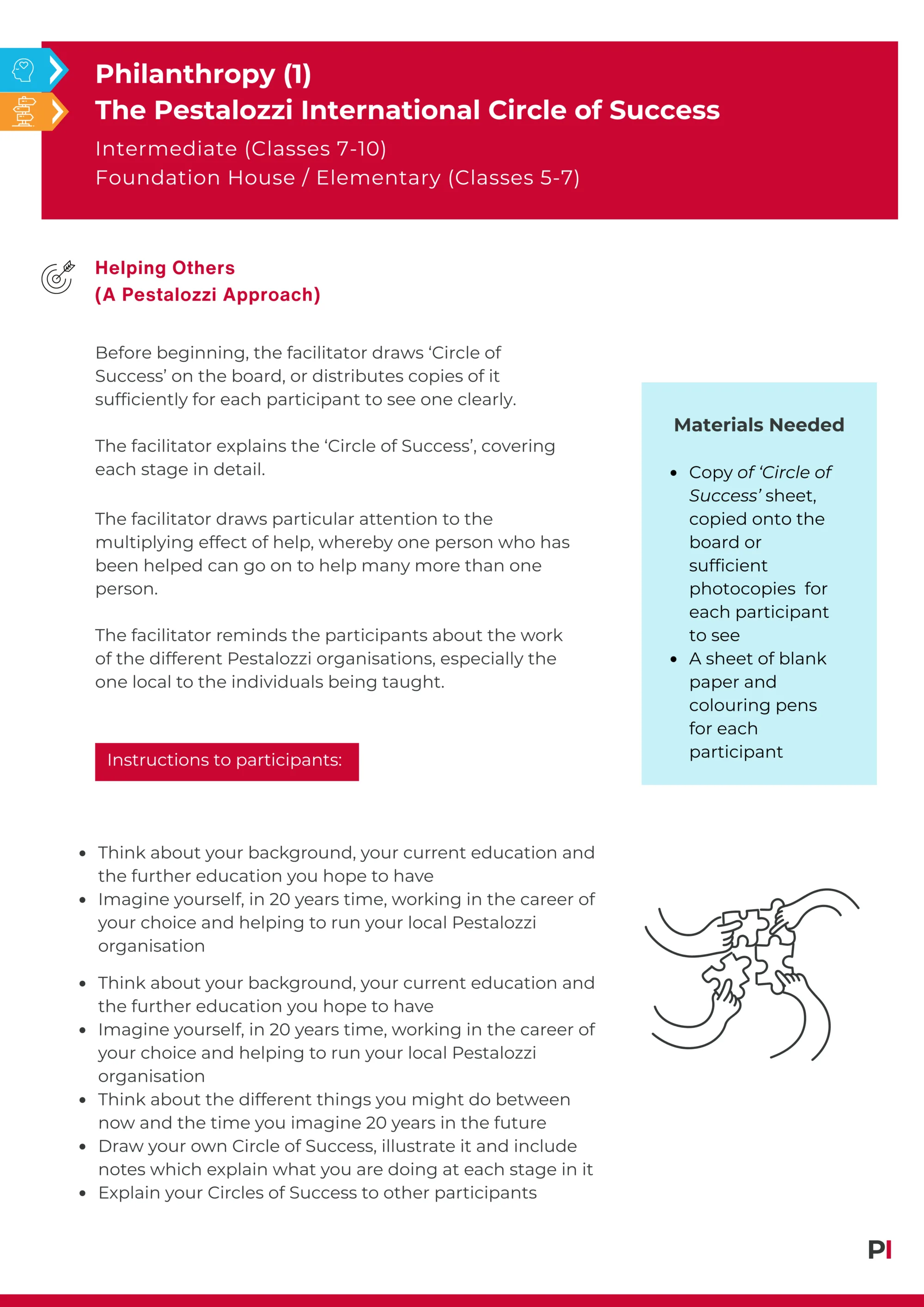
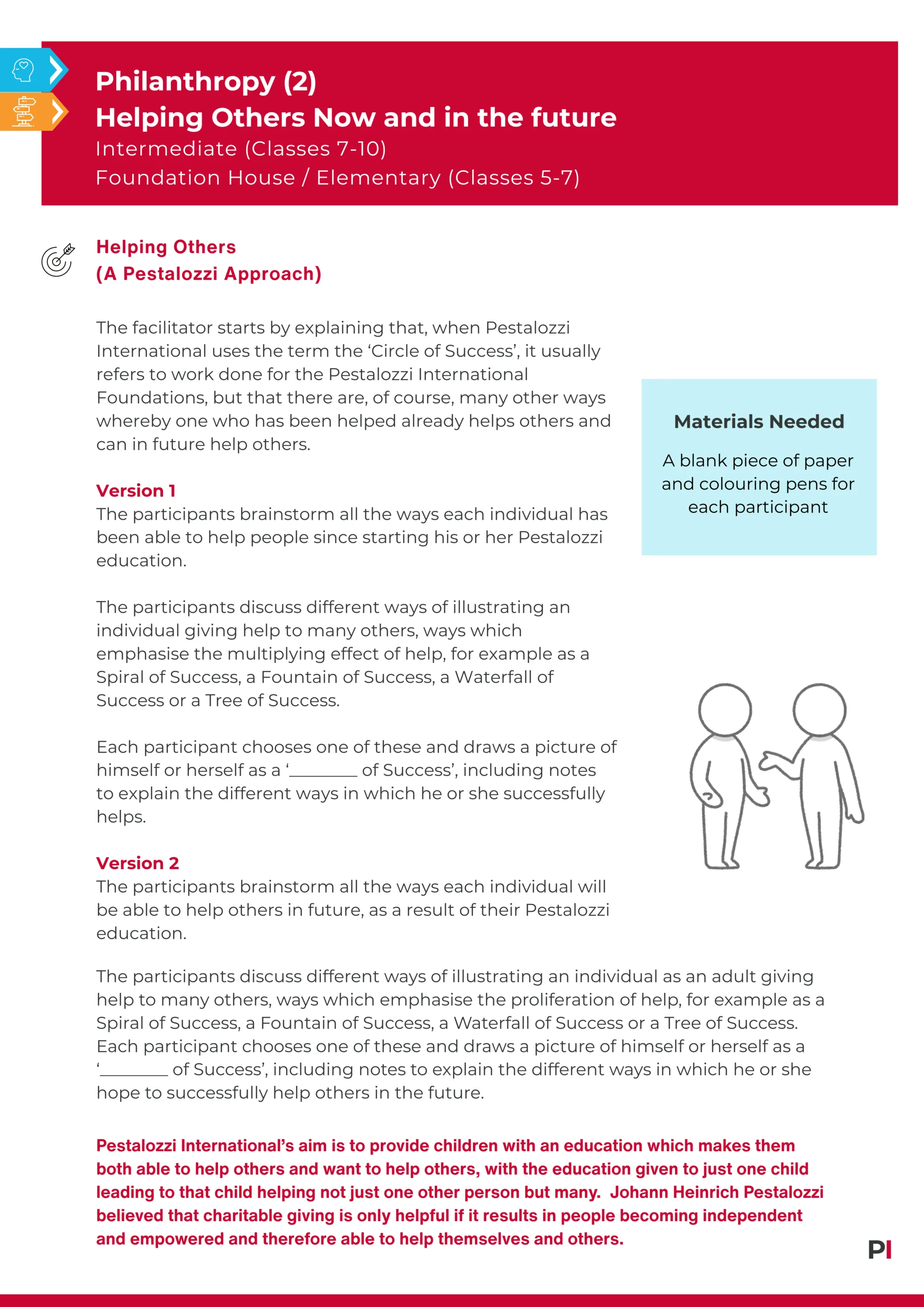
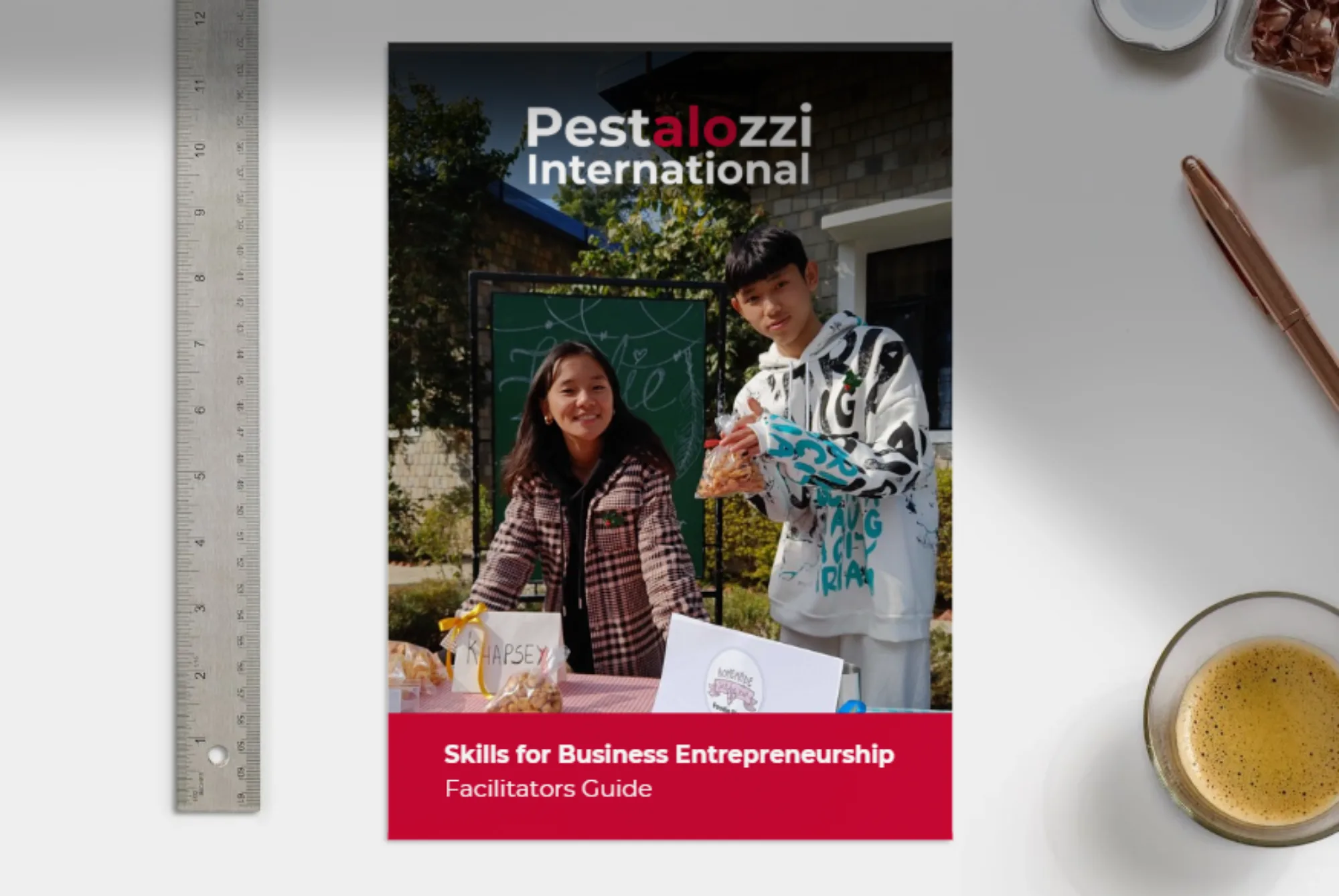
Small-Scale Ethical Business Entrepreneurship
An introduction for students in their final three years of secondary school to the skills required for business entrepreneurship and to give them an opportunity to run a small-scale handicraft / craft food business. It includes a facilitators’ guide, which includes interim and end of project reporting documents and an accompanying PowerPoint presentation. Please see section below for supporting presentation.
PowerPoint presentation "Small-Scale Ethical Business Entrepreneurship"
The Powerpoint presentation supports the Small-Scale, Ethical Business Entrepreneurship project for Upper Secondary Level by introducing students to key concepts in ethical entrepreneurship and guiding them through each stage of creating and running a small-scale handicraft or craft-food business. It outlines project goals, ethical principles, idea generation, market research, business planning, production, marketing, sales, and financial literacy. It also explains reporting requirements and highlights the skills students will develop, helping facilitators lead structured, practical, and reflective learning.

